When depression or anxiety does not improve enough with medication or talk therapy alone, it is normal to feel discouraged. At NeuroPsych Wellness Center, you have options. Our psychiatry team offers TMS therapy in Fairfax as part of a thoughtful, individualized plan that also includes medication management, Spravato for adults, talk therapy, and supportive services.
How Does TMS Therapy Work?
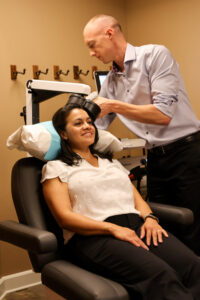
TMS therapy is noninvasive care in Fairfax that uses focused magnetic pulses to stimulate mood-related brain circuits in the prefrontal cortex. During a session, a treatment coil rests lightly against your scalp while a clinician sets a personalized stimulation level. You remain awake, there is no anesthesia, and you can typically return to normal activities after each visit. For adolescents aged fifteen and up, we follow FDA-cleared indications and tailor the schedule so TMS fits school and family routines.
Request an Appointment
Who Is A Good Candidate For TMS Therapy?
You may be a candidate for TMS in Fairfax if medications have caused side effects, stopped working, or never helped enough, or if you prefer a treatment that does not require systemic medication changes. Our team reviews your full picture: your prior medication trials, therapy history, sleep, stressors, and co-occurring conditions. This helps us decide whether TMS treatment should be part of your plan. Our team supports adolescents and families in aligning care with age and diagnosis. We evaluate how substance use or cravings interact with mood, and our clinicians address women’s health, pregnancy, and postpartum concerns, as well as geriatrics and traumatic brain injuries. This multidisciplinary approach helps determine whether TMS sessions are appropriate now or whether a different pathway should come first.
What To Expect From TMS Therapy At NeuroPsych Wellness Center
Your first appointment in Fairfax is a conversation about goals, safety, and logistics. If TMS treatment is appropriate, we map the treatment location on your scalp and set an initial stimulation level. A standard course typically involves five sessions per week over four to six weeks, followed by a brief taper; most patients complete about 30 to 36 sessions in total. Each session generally lasts about 20 to 40 minutes, and you can typically resume normal activities afterward.
Throughout the course, our clinicians track your mood, energy, and sleep, adjust stimulation settings as needed, and keep your schedule clear and predictable. This approach ensures your neurostimulation sessions remain focused, individualized, and aligned with your goals from start to finish.
Request an Appointment
Why Patients Choose Our Team
People value a steady, down-to-earth approach. At NeuroPsych Wellness Center in Fairfax, TMS therapy is delivered by a team that prioritizes safety, comfort, and clear communication from the first appointment through the final session.
We do not overpromise. We explain what is known, outline realistic timelines, and involve you in each decision about transcranial magnetic stimulation. If TMS treatment is not the best next step today based on your history and current needs, we will discuss why, recommend a path forward, and revisit TMS when circumstances change.
Take The Next Step With TMS Treatment In Fairfax
If you are ready to talk about a structured plan that respects your goals and schedule, our team is here to help. We will review your history, consider options for adults and for adolescents aged fifteen and up, and map a path forward with clear follow-up.
To learn whether TMS therapy in Fairfax fits your needs, request an appointment with NeuroPsych Wellness Center today. We look forward to supporting you with care that is practical, coordinated, and centered on your well-being.
TMS FAQ
TMS stands for transcranial magnetic stimulation. It is used to treat depression by stimulating the brain non-invasively using electromagnetic fields, like those produced by an MRI machine. During TMS Therapy, a magnetic field is administered in very short pulses to the part of the brain that research has demonstrated to be associated with depression. The typical initial course of treatment is about 19-37 minutes daily over 6-8 weeks.
TMS Therapy system uses short pulses of magnetic fields to stimulate the area of the brain that is thought to function abnormally in patients with depression. The magnetic field produces an electric current in the brain that stimulates the brain cells (neurons). This results in changes that are thought to be beneficial in the treatment of depression.
Many commercial plans and Medicare plans have recognized the effectiveness of treating depression with TMS Therapy and now cover TMS as part of their plans
TMS is non-systemic (does not circulate in the blood throughout the body), so it does not have side effects such as weight gain, sexual dysfunction, nausea, dry mouth, sedation, etc. The most common side effects reported during clinical trials were headache and scalp discomfort – generally mild to moderate – occurring less frequently after the first week of treatment.
No. TMS Therapy involves a unique method of using pulsed magnetic fields for therapeutic benefit. The intensity of the magnetic field is like that of the magnetic fields used in magnetic resonance imaging, or MRI. These techniques differ radically from the popular use of low intensity, static magnetic fields. These products deliver weak and undirected static fields that are not capable of activating brain cells.
No, the two procedures are very different. While both are effective in the treatment of depression, there are many differences in safety and tolerability.
During TMS Therapy, patients sit in a chair and are awake and alert throughout the entire 19–37-minute procedure – no sedation is used with TMS Therapy. Patients can transport themselves to and from treatment.
In contrast, “shock therapy,” or electroconvulsive therapy (ECT), intentionally causes a seizure. Patients receiving ECT must be sedated with general anesthesia and paralyzed with muscle relaxants. Recovery from an ECT treatment session occurs slowly, and patients are usually closely monitored for minutes or an even few hours after a treatment.
Short-term confusion and memory loss are common with ECT, and long-term disruptions in memory have been shown to occur and may persist indefinitely in some people. Because of the side effects associated with ECT, a significant amount of caregiver support is required.
A typical course of TMS Therapy is 5 times per week for 19-37 minutes sessions, depending on what the doctor determines is the correct protocol, over 6-8 weeks. Any additional treatments are based on clinical judgment.
TMS Therapy has been shown to be well tolerated and the TMS Therapy system has been demonstrated to be safe in clinical trials. Throughout over 10,000 active treatments performed in clinical trials, the most reported side effect related to treatment was scalp discomfort during treatment sessions. This side effect was generally mild to moderate and occurred less frequently after the first week of treatment. Less than 5% of patients treated with TMS Therapy discontinued treatment due to side effects.
While TMS Therapy has been demonstrated to be effective, not all patients will benefit from it. Patients should be carefully monitored for worsening symptoms, signs, or symptoms of suicidal behavior, and/or unusual behavior. Families and caregivers should also be aware of the need to observe patients and notify their treatment provider if symptoms worsen.
No, TMS Therapy uses the same type and strength of magnetic fields as MRIs (magnetic resonance imaging), which have been used in tens of millions of patients around the world and have not been shown to cause tumors. The magnetic energy used in a full course of TMS Therapy is a small fraction of just one brain scan with an MRI.
No, TMS Therapy system was systematically evaluated for its effects on memory. Clinical trials demonstrated that TMS Therapy does not result in any negative effects on memory or concentration.
No, the most common side effect related to treatment was scalp discomfort during treatment sessions. This side effect was generally mild to moderate and occurred less frequently after the first week of treatment.
If necessary, you can treat this discomfort with an over-the-counter analgesic. If these side effects persist, your doctor can temporarily reduce the strength of the magnetic field pulses being administered to make treatment more comfortable.
Less than 5% of patients treated with TMS Therapy discontinued treatment due to side effects.
How long does the antidepressant effect last?
In a clinical trial, 2 out of 3 patients who had either responded to treatment or completely remitted their depression symptoms reported 12 months later that they remained at the level they were at the end of the trial. Additionally, after the trial, only 1 in 3 patients needed to return for ‘maintenance’ TMS sessions.
Yes. In clinical trials, TMS Therapy was safely administered with and without other antidepressant medications.